Exotic Coconut Vanilla Cake
Highlighted under: Bakery-Style Treat Recipes
I absolutely adore baking, and this Exotic Coconut Vanilla Cake has quickly become one of my favorite recipes. Each slice is a delightful blend of creamy coconut and rich vanilla that transports me to a tropical paradise. What makes this cake special is the unique texture, which combines a moist crumb with a light, airy feel. I love that it's perfect for any occasion, from casual family gatherings to elegant celebrations. You'll be surprised how easy it is to achieve such exotic flavors in your own kitchen!
This endeavor into the world of coconut and vanilla flavors was inspired by a recent trip to a lovely beach resort. I tasted a dessert there that lingered on my palate, so I decided to replicate it at home. After several trials, I found the perfect balance between coconut milk and fresh vanilla, creating a surprisingly light yet indulgent dessert.
One crucial tip I discovered while experimenting was to let the cake cool completely before frosting it. This helps the frosting set beautifully without melting into the cake, giving you those gorgeous layers that are so pleasing to the eye. Trust me, it's worth the wait!
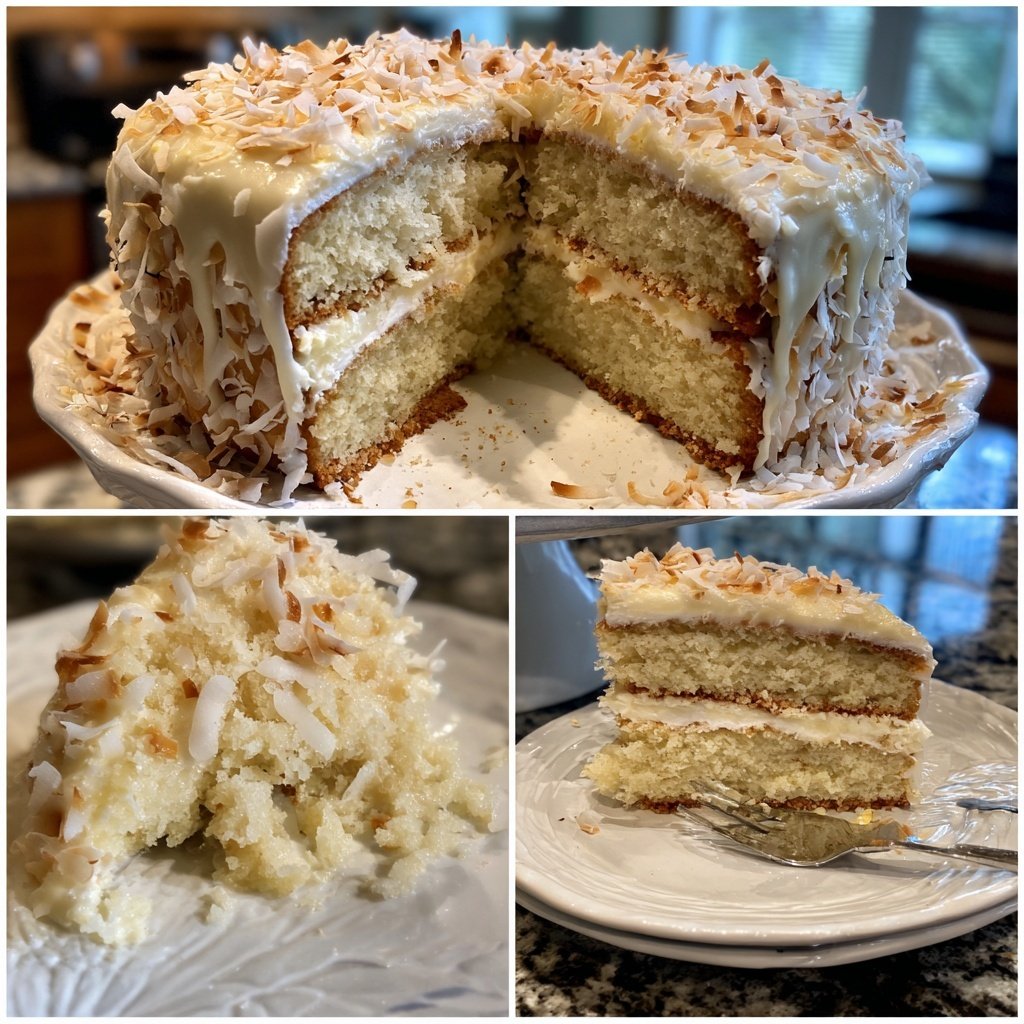
Why You'll Love This Cake
- Deliciously moist with a rich coconut flavor
- A subtle sweetness that balances perfectly with gluten-free options
- Impressive enough for a celebration, yet easy enough for a weeknight treat
The Importance of Coconut Milk
Coconut milk is a key ingredient in this Exotic Coconut Vanilla Cake, contributing to its moist texture and tropical flavor. I recommend using full-fat coconut milk for a creamier consistency. If you're looking for a lighter option, coconut milk from a carton (not the canned kind) can also be used, although it may affect the cake's density slightly. Ensure you mix it well before adding to the batter to incorporate the cream that often separates during storage.
For those with nut allergies, it's worth noting that coconut is a fruit, not a nut, making this cake a great treat for a wider audience. Additionally, coconut milk can be substituted with almond milk or oat milk if you're seeking a dairy-free alternative. Just remember that these substitutes will change the flavor profile slightly.
Achieving the Perfect Frosting
The frosting is just as important as the cake itself! For a fluffy, spreadable consistency, ensure your butter is at room temperature but not melted. This helps the powdered sugar incorporate more easily, resulting in a smooth frosting. I find that beating the butter first until creamy ensures a lighter texture; you want it to look pale and fluffy, which usually takes about 2-3 minutes of mixing.
If you're looking to add a bit more depth to your frosting, consider mixing in a couple of tablespoons of finely shredded coconut or a splash of coconut extract for an extra boost. Should your frosting turn out too thick, add a teaspoon of coconut milk at a time until you reach your desired spreading consistency.
Storing and Serving Tips
This cake stores well for up to five days when kept in an airtight container at room temperature, where it continues to soften and develop flavor. If you need a longer storage solution, consider freezing the cake. Wrap it tightly in plastic wrap and then aluminum foil; it can last in the freezer for up to three months. To serve, I recommend letting it thaw in the refrigerator overnight for best results.
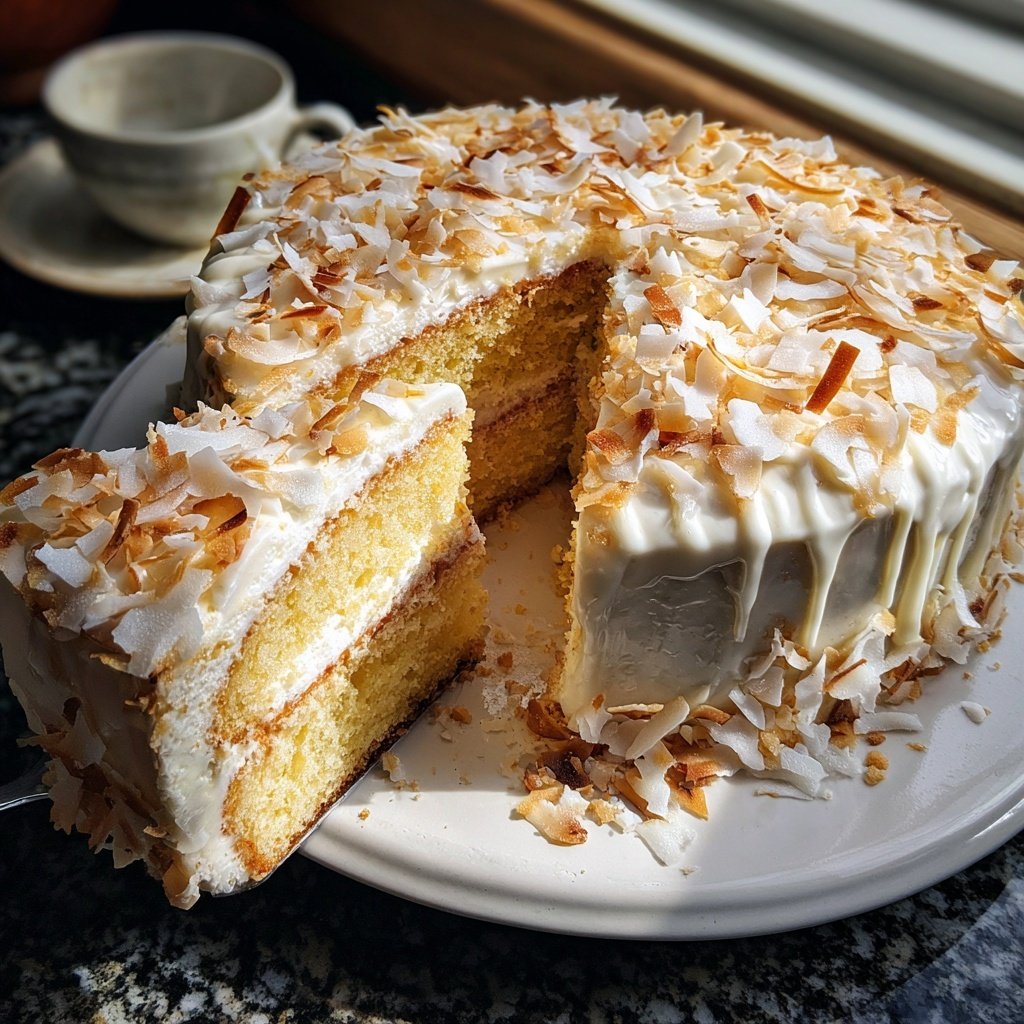
When it comes to serving, this cake pairs wonderfully with fresh tropical fruits like pineapple or mango. A scoop of vanilla ice cream on the side elevates the dessert even further. For a visually stunning presentation, you can also dust the top with a sprinkle of toasted coconut flakes right before serving.
Ingredients
Gather all your ingredients before you start to streamline the baking process.
For the Cake
- 1 ½ cups all-purpose flour
- 1 cup granulated sugar
- ½ cup unsweetened shredded coconut
- ½ cup unsalted butter, softened
- ¾ cup coconut milk
- 3 large eggs
- 1 teaspoon vanilla extract
- 1 teaspoon baking powder
- ½ teaspoon baking soda
- ½ teaspoon salt
For the Frosting
- 1 cup unsalted butter, softened
- 4 cups powdered sugar
- ⅓ cup coconut milk
- 1 teaspoon vanilla extract
- 2 tablespoons shredded coconut (for garnish)
Ensure to sift the powdered sugar to achieve a smooth frosting texture.
Instructions
Prepare your baking pan by greasing it and lining the bottom with parchment paper.
Prepare the Oven
Preheat your oven to 350°F (175°C) and grease a 9-inch round cake pan.
Mix the Dry Ingredients
In a bowl, whisk together flour, baking powder, baking soda, salt, and shredded coconut.
Cream the Butter and Sugar
In a large mixing bowl, cream together softened butter and granulated sugar until light and fluffy.
Combine Wet Ingredients
Add eggs one at a time, mixing well after each addition. Stir in coconut milk and vanilla extract.
Combine Wet and Dry Mixtures
Gradually add the dry mixture to the wet mixture, stirring until just combined. Do not overmix.
Bake the Cake
Pour the batter into the prepared cake pan and bake for 30 minutes or until a toothpick comes out clean.
Cool the Cake
Allow the cake to cool in the pan for 10 minutes before transferring it to a wire rack to cool completely.
Prepare the Frosting
In a bowl, beat softened butter until creamy, then gradually add powdered sugar and coconut milk until smooth and fluffy.
Frost the Cake
Spread the frosting over the cooled cake. Top with shredded coconut for garnish.
Allow the frosted cake to set before slicing to ensure clean cuts.
Pro Tips
- For a tropical twist, you can add a splash of pineapple juice to the batter for added flavor.
Ingredient Substitutions
If you find yourself without all-purpose flour, you can easily replace it with a gluten-free blend. Just ensure the blend includes xanthan gum or another binding agent to maintain the cake's structure. This substitution will allow you to enjoy the same delightful flavor, accommodating those with gluten sensitivities.
For sweetness, if you prefer a natural alternative, consider using coconut sugar instead of granulated sugar. This will impart a slight caramel flavor while maintaining the cake's moistness, although you might need to experiment slightly with the amounts as coconut sugar can vary in sweetness.
Troubleshooting Common Issues
If your cake domes up excessively in the center, it's likely due to an oven temperature that is too high. To fix this, make sure to calibrate your oven with an oven thermometer. Baking at the correct temperature ensures an even rise, producing a flat cake top that’s easier to frost.
Should your cake turn out too dry, check that you're measuring the flour properly—overpacking can happen easily. Using the spoon-and-level method will give you accurate flour measurement. Additionally, always keep an eye on your baking time; every oven is different, and it's better to slightly underbake than overbake to preserve moisture.
Questions About Recipes
→ Can I use cake flour instead of all-purpose flour?
Yes, using cake flour will give the cake a softer texture.
→ Can I make this cake dairy-free?
Absolutely! Substitute the butter with a dairy-free alternative and use coconut yogurt in the frosting.
→ How do I store leftover cake?
Store it in an airtight container in the refrigerator for up to 3 days.
→ Can I freeze this cake?
Yes, you can freeze the cake. Just make sure it's well-wrapped to prevent freezer burn.
Exotic Coconut Vanilla Cake
Created by: The Thacozyspoon Team
Recipe Type: Bakery-Style Treat Recipes
Skill Level: Intermediate
Final Quantity: 8 servings
What You'll Need
For the Cake
- 1 ½ cups all-purpose flour
- 1 cup granulated sugar
- ½ cup unsweetened shredded coconut
- ½ cup unsalted butter, softened
- ¾ cup coconut milk
- 3 large eggs
- 1 teaspoon vanilla extract
- 1 teaspoon baking powder
- ½ teaspoon baking soda
- ½ teaspoon salt
For the Frosting
- 1 cup unsalted butter, softened
- 4 cups powdered sugar
- ⅓ cup coconut milk
- 1 teaspoon vanilla extract
- 2 tablespoons shredded coconut (for garnish)
How-To Steps
Preheat your oven to 350°F (175°C) and grease a 9-inch round cake pan.
In a bowl, whisk together flour, baking powder, baking soda, salt, and shredded coconut.
In a large mixing bowl, cream together softened butter and granulated sugar until light and fluffy.
Add eggs one at a time, mixing well after each addition. Stir in coconut milk and vanilla extract.
Gradually add the dry mixture to the wet mixture, stirring until just combined. Do not overmix.
Pour the batter into the prepared cake pan and bake for 30 minutes or until a toothpick comes out clean.
Allow the cake to cool in the pan for 10 minutes before transferring it to a wire rack to cool completely.
In a bowl, beat softened butter until creamy, then gradually add powdered sugar and coconut milk until smooth and fluffy.
Spread the frosting over the cooled cake. Top with shredded coconut for garnish.
Extra Tips
- For a tropical twist, you can add a splash of pineapple juice to the batter for added flavor.
Nutritional Breakdown (Per Serving)
- Calories: 400 kcal
- Total Fat: 28g
- Saturated Fat: 18g
- Cholesterol: 90mg
- Sodium: 160mg
- Total Carbohydrates: 38g
- Dietary Fiber: 2g
- Sugars: 26g
- Protein: 4g